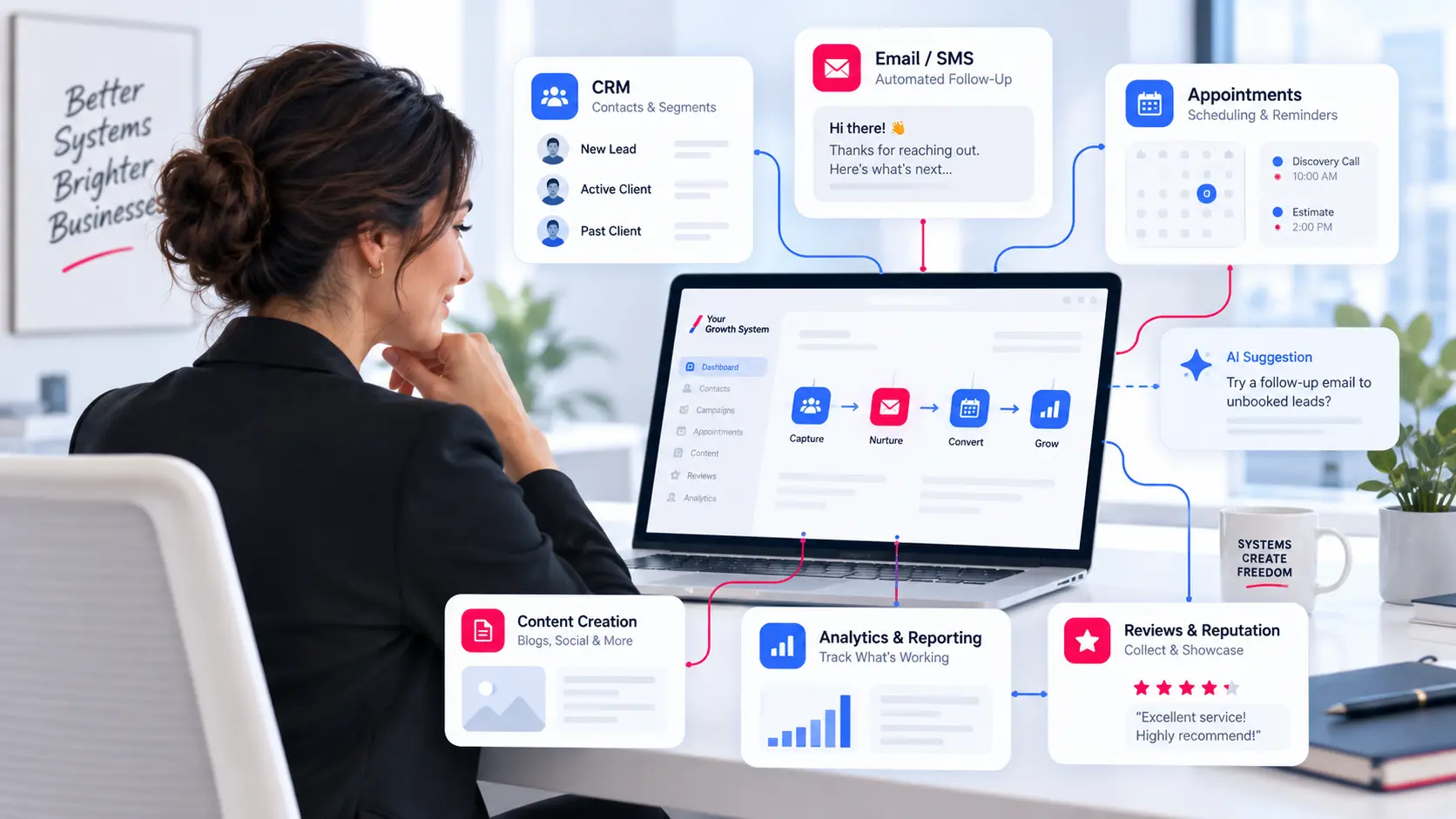
We have entered the AI era, whether we feel ready for it or not. New tools appear constantly, familiar platforms keep adding AI features, and businesses are being told they need to adopt them or risk falling behind.
If you are not sure what any of this means for your business, that is understandable. The pace is fast, the language can be confusing, and the number of options can feel overwhelming.
For a service business, the goal is not to use as much AI as possible. It is to understand where AI and marketing automation can improve response time, follow-up, organization, and decision-making without making the client experience less human.
That starts with the business problem, not the technology. AI can support a clear process, but it cannot decide who you need to reach, why they should choose your business, or how the client journey should work.
Key Takeaways
- AI and automation perform different jobs. Many business needs can be solved with straightforward automation.
- The strongest uses remove friction from a clearly defined part of the client journey.
- AI cannot fix unclear positioning, a weak client journey, or a missing process.
- Human judgment remains essential wherever trust, accuracy, or client relationships are involved.
- Start with the business result and process. Then choose the simplest technology capable of supporting them.
AI and Automation Are Not the Same Thing
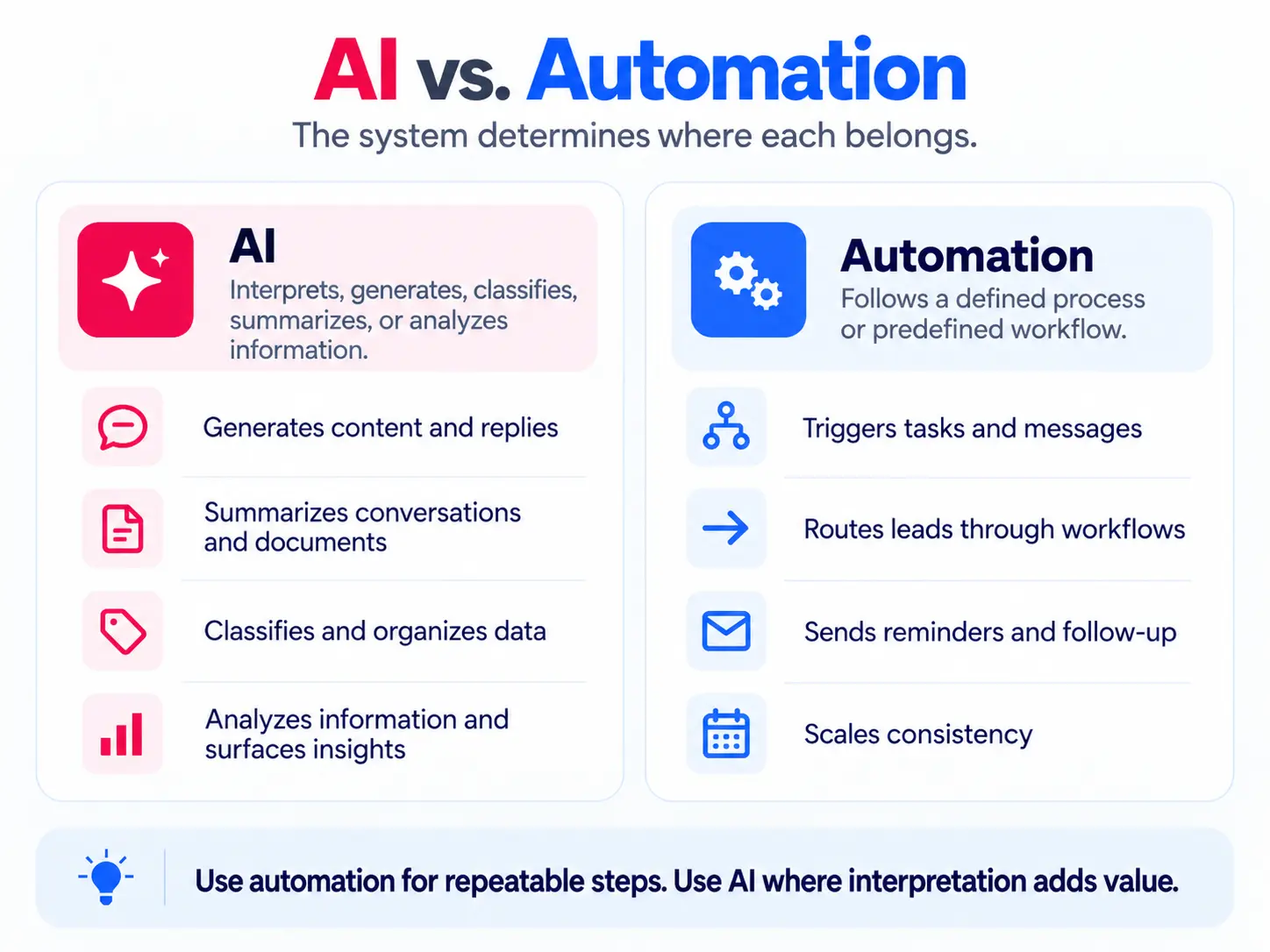
The terms are often used together, but they perform different functions.
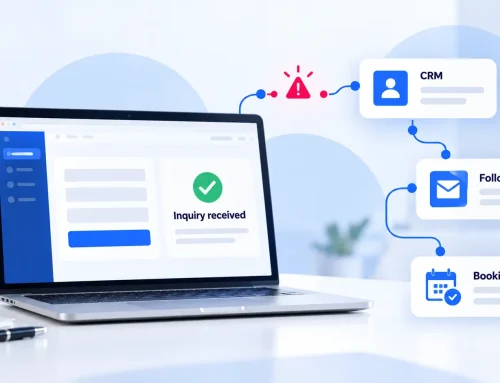
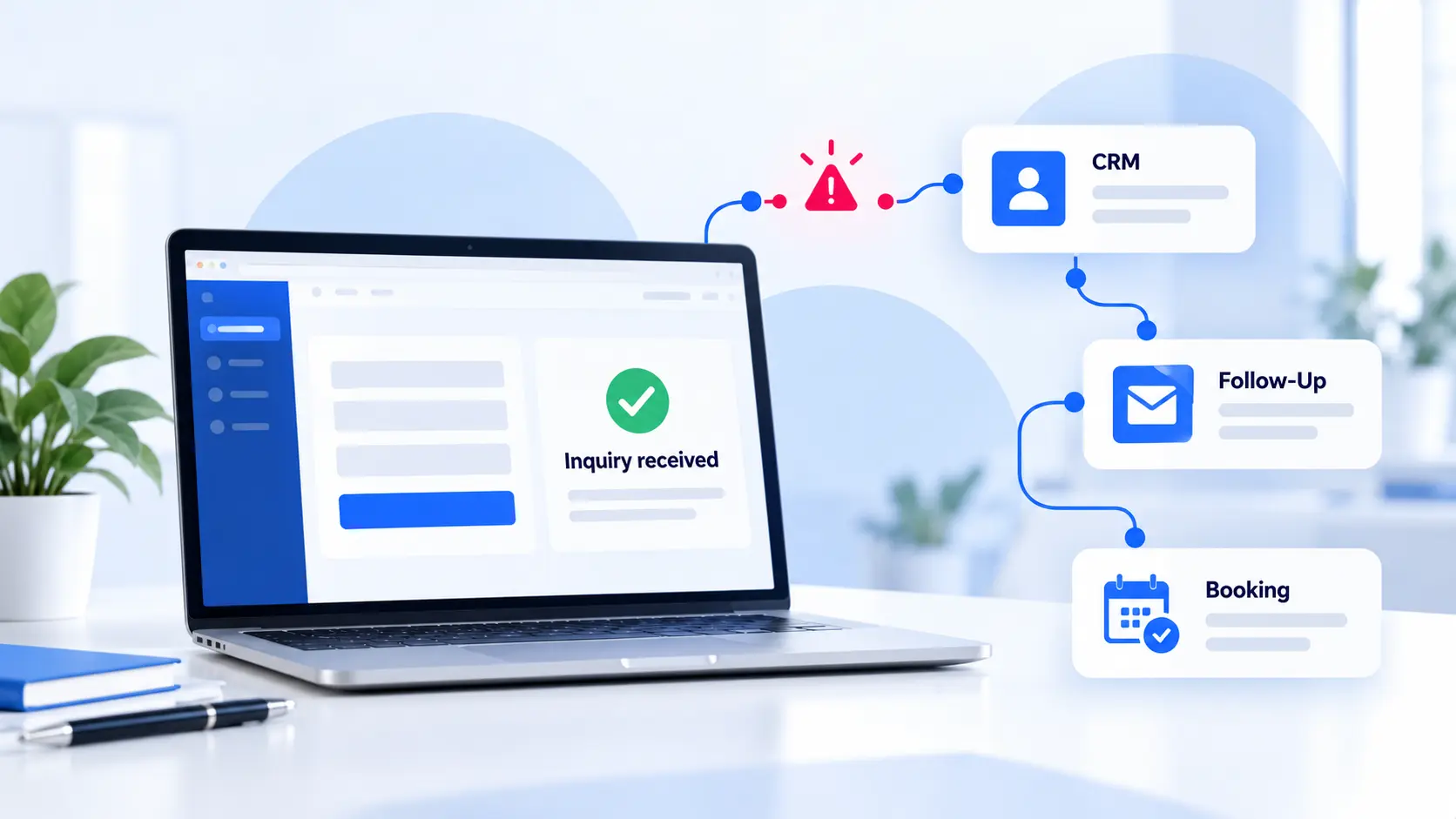
Automation follows predefined rules. For example:
- A prospective client completes a form.
- The CRM creates a contact and opportunity.
- The person receives a confirmation.
- A team member is notified.
- A follow-up task is created.
- A reminder is sent if no one responds.
That workflow does not necessarily require AI.
AI interprets, generates, classifies, or summarizes information. It may help:
- Summarize an inquiry or conversation
- Categorize a prospective client’s needs
- Extract information from an email or form
- Draft a response for human review
- Identify patterns across CRM data
- Develop or repurpose content
The distinction matters because businesses often add AI to processes that would be better served by dependable automation.
Use the simplest tool that reliably solves the problem.
Where AI and Marketing Automation Actually Help
1. Faster Lead Response
Someone who contacts your business has already taken a meaningful step. The system should make sure that interest does not sit unanswered.
Automation can immediately:
- Confirm that the inquiry was received
- Provide relevant scheduling information
- Notify the appropriate person
- Create or update the CRM record
- Start a defined follow-up process
AI can help summarize the request, identify the relevant service, or prepare a response. The goal is not to automate every conversation. It is to make sure each prospective client receives a timely and useful next step.
2. More Consistent Follow-Up
Service businesses often lose opportunities because follow-up depends on someone remembering what to do.
Automation can support:
- New inquiry follow-up
- Consultation and appointment reminders
- Missed-call responses
- Estimate and proposal follow-up
- No-show recovery
- Longer-term nurturing
AI may help prepare or personalize some of that communication, but the workflow creates the consistency.
AI does not fix a missing follow-up process. Define the process first, then determine where technology can improve it.
3. Better CRM Organization
A CRM becomes useful when the information inside it helps the business understand where each relationship stands and what should happen next.
AI can assist by:
- Summarizing notes and conversations
- Identifying common inquiry topics
- Categorizing contacts
- Extracting useful information from messages
- Surfacing patterns across interactions
- Reducing repetitive data entry
The underlying CRM structure still matters. Unclear pipelines, inconsistent data, and undefined ownership remain problems regardless of how much AI is added.
Technology should support the system, not substitute for designing it.
4. More Efficient Content Production
AI can reduce the time required to organize ideas, develop first drafts, and repurpose existing material.
It can help with:
- Article outlines
- Email drafts
- Social media content
- Frequently asked questions
- Video and podcast repurposing
- Topic research
- Editing and summarization
But faster production does not automatically create better marketing.
Effective content still requires a clear audience, accurate information, useful subject matter, a recognizable point of view, and a defined role within the larger marketing system.
AI can accelerate production. It should not determine the strategy.
5. Client Retention and Reputation
Marketing does not end when someone becomes a client.
Automation can support:
- Appointment and service reminders
- Educational follow-up
- Renewal communication
- Client reactivation
- Review requests
- Referral communication
AI may help prepare messages or identify patterns in client feedback. The larger value comes from making sure good client relationships do not disappear from the system after the first transaction.
A strong reputation still begins with delivering a strong experience. Technology can make the request and response process more consistent, but it cannot create client satisfaction.
6. Reporting and Decision-Making
AI can help summarize information and make patterns easier to identify.
That can support questions such as:
- Which sources generate qualified inquiries?
- Where are opportunities being lost?
- Which questions come up repeatedly?
- Which follow-up steps are being missed?
- Which marketing activities contribute to clients and revenue?
- What part of the system should be investigated next?
This is useful when it leads to a better decision. It is less useful when AI simply produces another dashboard or report that no one acts on.
What AI Does Not Fix
AI cannot compensate for:
- Unclear positioning
- Marketing directed at the wrong audience
- A confusing website
- Weak calls to action
- Slow or inconsistent follow-up
- An undefined sales process
- Poor client service
- Inconsistent CRM use
- A missing retention strategy
- A weak reputation
Automating an unclear message only sends the unclear message faster. Producing more content does not help if no one has defined who it is for. An AI chatbot does not repair a confusing website.
Automation scales a process. It does not automatically improve it.
That is why strategy and implementation must come before another tool.
Keep the Client Experience Human
Service businesses grow through trust, responsiveness, expertise, and reputation. Clients are often choosing a person or team, not simply purchasing a product.
The goal should not be to remove people from the client journey. Technology should handle repetitive steps so people can give more attention to the conversations and decisions where they provide the most value.
A useful automation makes sure something happens. A useful AI tool makes information easier to work with. A person remains responsible for the relationship.
That also means protecting client information. Before placing personal, confidential, financial, health, or business information into an AI platform, review how the tool stores and uses data, who can access it, and whether it is appropriate for the information involved.
What to Ask Before Adding AI
Before adopting another AI tool or building an automation, ask:
- What specific business result are we trying to improve?
- Where does the problem occur in the client journey?
- Is the underlying process already clear?
- Could standard automation solve the problem without AI?
- What information will the tool receive, and how will that information be protected?
- Who will review the output and remain responsible for the next step?
- How will we know whether the technology improved the result?
If the first three questions do not have clear answers, adding another tool should not be the priority.
Frequently Asked Questions
Build the Process Before You Add the Tool
AI will continue appearing in websites, CRMs, advertising platforms, communication tools, and everyday business software. The important question is not whether your business will use AI. It is where AI actually creates value.
At Rosetta Marketing Designs, we consider AI and automation within the larger marketing system:
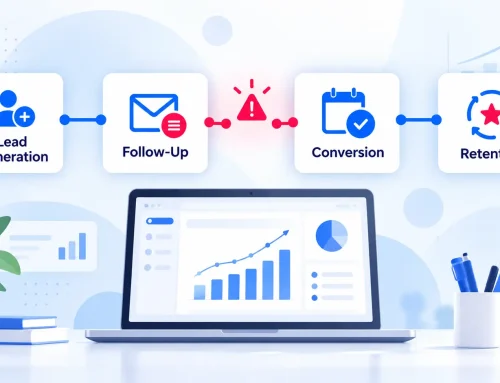
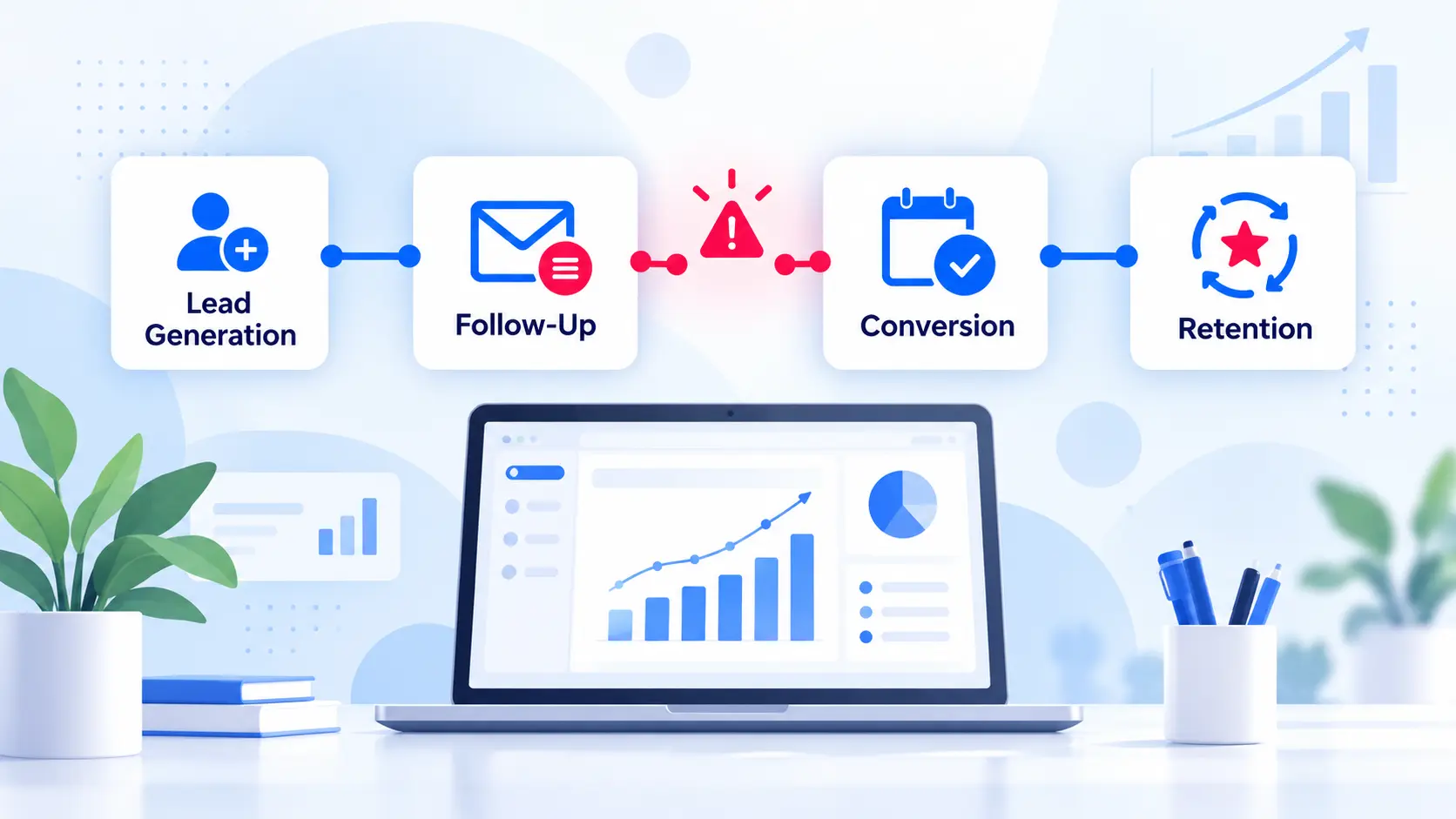
Strategy → Visibility → Inquiry → CRM and Follow-Up → Conversion → Retention → Reviews and Referrals
Technology should strengthen that journey. It should help your business respond faster, operate more consistently, protect valuable relationships, and make better decisions.
Your business does not need AI everywhere. It needs the right strategy, processes, and tools working together.