When marketing is not producing the expected results, the common response is to add something.
A new campaign. A redesigned website. More content. Different software. Another automation. A larger advertising budget.
Any of those could help. But only if it addresses the problem that is actually limiting growth.
Service businesses often have enough marketing activity. The greater problem is that an important handoff is unclear, inconsistent, or missing. These marketing system gaps can appear between visibility and the website, between an inquiry and follow-up, or between completing the work and maintaining the client relationship.
Before adding more marketing, find where the current system is losing opportunities.
Key Takeaways
- The most visible marketing problem is not always the problem that should be fixed first.
- Following actual prospective clients through the client journey reveals where opportunities are being lost.
- Lead volume, messaging, website conversion, follow-up, sales, and retention require different solutions.
- The best priority is the gap that is causing the greatest loss and limiting everything that follows.
- Most service businesses can improve in stages by strengthening what they already have.
What Is a Marketing System Gap?
A marketing system gap is a point where information, responsibility, or opportunity fails to move consistently from one stage of the client journey to the next.
Examples include:
- Someone finds the business but does not understand what it offers.
- A website visitor does not see a clear next step.
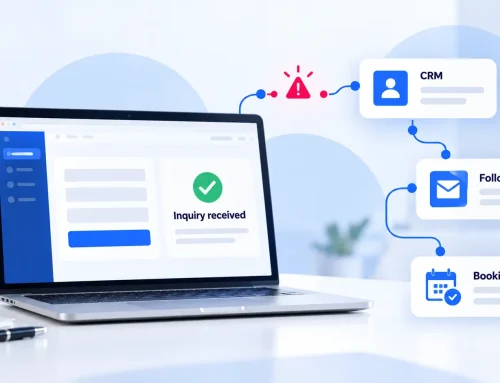
- A completed form sends an email but does not create a CRM record.
- An inquiry receives an initial response but no continued follow-up.
- A qualified prospective client receives a proposal but no defined next step.
- A completed project does not trigger continued communication or a review request.
- Marketing activity is measured without being connected to clients or revenue.
Each gap reduces the value of the work happening before it.
Generating more traffic will not solve inconsistent follow-up. Improving follow-up will not solve unclear positioning. Adding a CRM will not help if nobody has defined how opportunities should move through it.
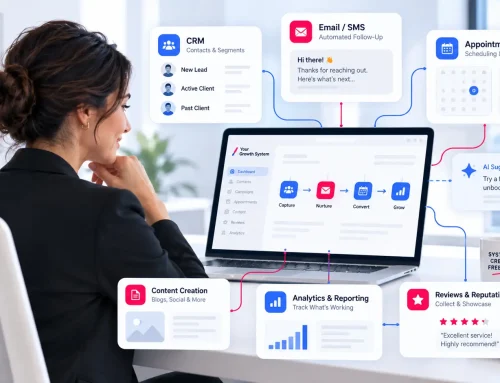
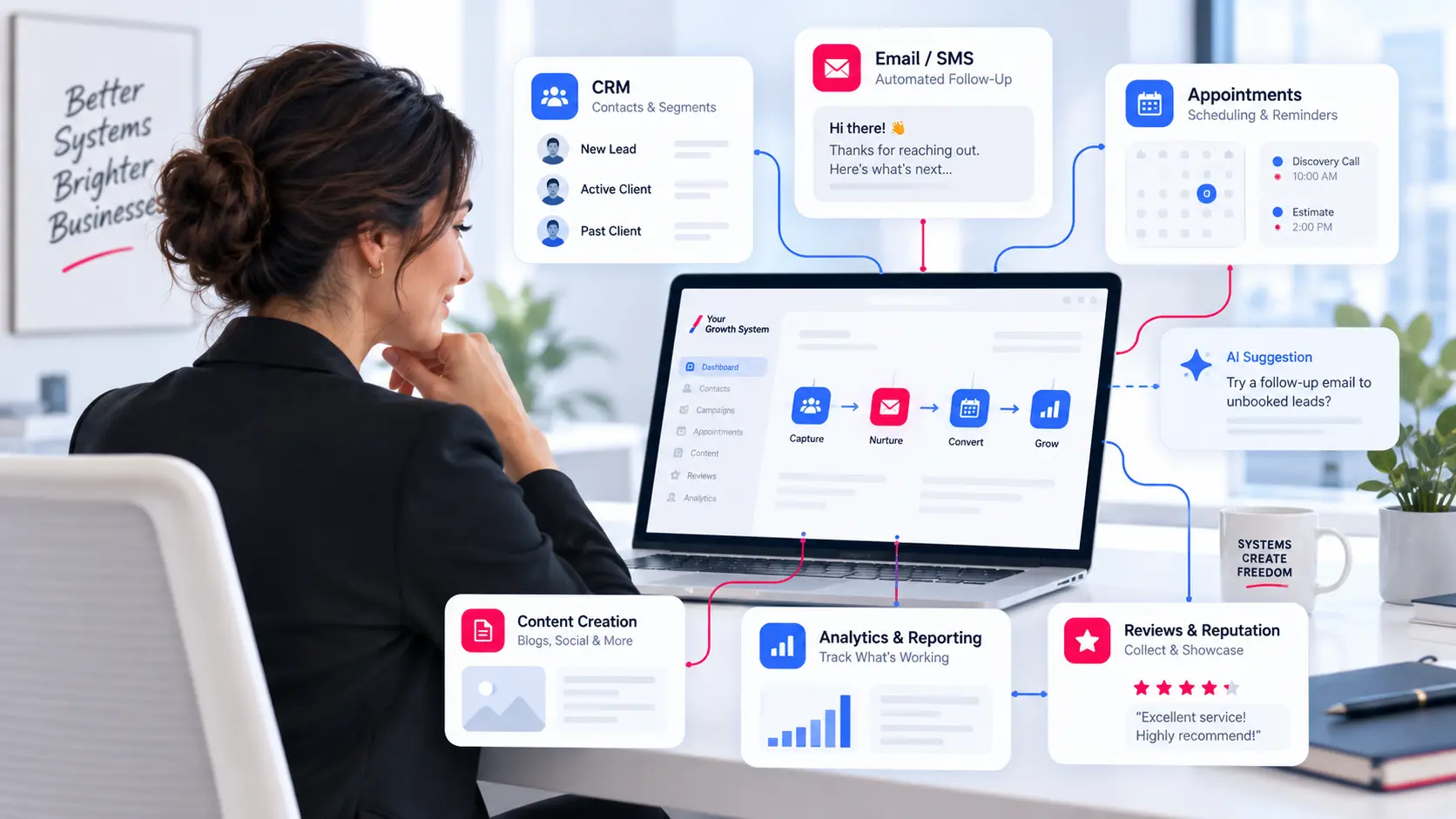
A connected marketing system makes those handoffs intentional.
Why the Visible Problem May Not Be the Real Problem
A business owner may notice that revenue is lower than expected and conclude that the company needs more leads.
That may be true. It could also be receiving enough inquiries but responding too slowly. The website may be attracting the wrong people. The message may not explain why the service is different. Estimates may be sent without consistent follow-up. Existing clients may have needs the business never addresses again.
The same visible outcome can have several causes.
That is why marketing decisions should begin with diagnosis rather than a list of available services.
Consider the difference between these situations:
- Not enough qualified people are finding the business. This may be a visibility or targeting problem.
- People are visiting but rarely taking action. This may be a messaging, website, or offer problem.
- Inquiries are arriving but not receiving consistent responses. This is likely a process or follow-up problem.
- Conversations are happening but few people become clients. The problem may involve fit, positioning, sales, pricing, or the next step.
- Clients complete one transaction and disappear. This may be a retention or communication problem.
Each situation requires a different response.
Follow the Actual Client Journey
The most useful way to find a marketing system gap is to follow real prospective clients through the process.
Start with a recent group of qualified inquiries. Ten is often enough to expose a pattern.
For each one, determine:
- How did the person find the business?
- What service or problem brought them in?
- Which page, phone number, form, or scheduling tool did they use?
- Where was their information recorded?
- How quickly did someone respond?
- What next step were they given?
- Did they complete that next step?
- Did they become a client?
- If not, where did the process stop?
- Was the outcome recorded anywhere?
This turns a general concern such as “marketing is not working” into something specific enough to address.
The same process can be applied after someone becomes a client:
- Was continued communication expected?
- Were reminders or next steps provided?
- Was the client invited to leave a review?
- Was there an appropriate opportunity for repeat service?
- Could the business identify and contact inactive clients?
The goal is to see what actually happens rather than what the process is assumed to be.
What Different Marketing Problems Reveal
Not Enough Qualified Inquiries
A lack of qualified inquiries may indicate a problem with strategy, positioning, visibility, or the offer itself.
Review:
- Whether the business has identified a clear audience
- Whether the message addresses a problem that audience recognizes
- Whether the business appears where prospective clients are looking
- Whether its content answers the questions people ask before choosing
- Whether advertising and outreach are reaching appropriate prospects
SEO & Visibility and Content Marketing may be part of the solution, but visibility should not be expanded until the audience and message are clear.
People Are Visiting but Not Taking Action
Traffic without inquiries points toward the message, offer, website, or conversion path.
Review:
- Whether visitors can quickly understand what the business does
- Whether the page speaks to the right audience
- Whether the value of the service is clear
- Whether the next step is obvious
- Whether forms and scheduling work properly
- Whether the mobile experience has been tested
- Whether the page gives people enough confidence to continue
Branding & Messaging shapes what visitors understand. Web Design & Hosting determines how easily they can act on it.
Inquiries Are Arriving but Follow-Up Is Inconsistent
This is usually a process problem rather than a lead-generation problem.
Review:
- Where calls, forms, messages, and booking requests are recorded
- Who is responsible for responding
- How quickly the first response happens
- Whether the prospective client receives a clear next step
- What happens when the person does not respond
- Whether estimates, proposals, and consultations receive follow-up
- Whether the team can see where each opportunity stands
CRM & Follow-Up should create consistency without making communication feel impersonal.
Conversations Are Not Becoming Clients
If qualified people are speaking with the business but not moving forward, the problem may involve positioning, fit, expectations, price, trust, or the sales process.
Review:
- Whether the prospective client is a good fit
- Whether the service addresses the need that brought them in
- Whether the value and process are explained clearly
- Whether the person understands what happens next
- Whether concerns are being recorded and examined
- Whether follow-up continues after the initial conversation
More leads will increase the number of conversations. It will not necessarily improve the percentage that become clients.
Good Clients Are Not Returning or Referring Others
Lead generation receives most of the attention, but growth can also be limited after the first sale.
Review:
- Whether clients receive useful communication after the work is complete
- Whether recurring, maintenance, or additional needs are identified
- Whether inactive clients can be contacted appropriately
- Whether satisfied clients are consistently invited to leave reviews
- Whether the client experience supports referrals
- Whether the business knows which clients are returning
Client retention protects the relationships the business has already invested in creating.
The Business Cannot Tell What Is Working
If the business cannot connect inquiries, clients, and revenue to its marketing activity, decisions become guesswork.
Reporting should help answer:
- Which sources produce qualified inquiries?
- How quickly does the business respond?
- Where do opportunities stop progressing?
- How many qualified inquiries become clients?
- Which clients return?
- Which activities contribute to meaningful business results?
- What should be improved before more money is spent?
The purpose of reporting is not another dashboard. It is deciding what to do next.
How to Decide What to Fix First
Several parts of a marketing system may need attention. That does not mean they should all be addressed at once.
Evaluate each gap using four questions:
How Much Value Is Being Lost?
A problem affecting most qualified inquiries deserves more attention than an occasional inconvenience.
How Often Does It Happen?
Look for repeated patterns. One unusual situation may not justify rebuilding a process.
Does It Limit Everything That Comes After It?
Some gaps must be fixed before another investment can work.
For example, increasing advertising before repairing an unreliable inquiry process may simply create more missed opportunities.
Can the Existing System Be Strengthened?
The answer is not always new software, a new website, or a complete rebuild.
A clearer message, simpler form, defined response process, updated pipeline, or consistent review request may resolve the immediate problem.
Strategy & Implementation establishes the order of work so each improvement supports what comes next.
When Should You Add More Marketing?
Add a new channel, tool, campaign, or technology when it strengthens a defined part of the system.
That usually means:
- The audience and objective are clear.
- The current gap has been identified.
- The new addition has a specific job.
- Someone is responsible for managing it.
- It connects to the existing client journey.
- The business knows how it will evaluate the result.
Do not add marketing simply because a platform is popular, a competitor is using it, or the current activity feels insufficient.
The better question is:
What problem will this solve, and what happens after it works?
That keeps the system focused on business results rather than accumulating more activity.
Frequently Asked Questions
Find the Gap Before You Add More Marketing
A service business does not need every marketing service at once.
It needs a clear understanding of where qualified opportunities are being lost, what should be improved first, and how that improvement connects to the rest of the client journey.
Rosetta Marketing Designs evaluates the strategy, message, visibility, website, inquiry process, CRM, follow-up, and retention system around two outcomes: